
Review Management Software: 10 Platforms Worth Comparing
Most comparisons of review management software start with a feature grid and end with a winner that fits nobody well. That's the wrong order. The buying decision comes first, and it's usually three questions. Does the price climb per location, per domain, per invitation, or stay flat? Is the work mainly local search visibility or ecommerce product reviews? Does the business need a focused reviews inbox, or reviews bundled with listings, messaging, surveys, and social publishing?
Those questions matter because reviews shape buying before a sales conversation starts. In the Pew Research Center survey published on December 19, 2016, 82% of U.S. adults said they read online customer ratings or reviews at least sometimes before purchasing something for the first time, while 40% said they did so always or almost always. A tool that slows replies or hides sources doesn't solve that problem, however polished the dashboard looks.
The ten platforms below are grouped by fit, not by a universal score. Public prices are stated where the vendor publishes them. Quote-only pricing is called out plainly, because an opaque quote changes comparison, procurement, and renewal risk for small teams.
Table of Contents
- 1. Synup
- 2. Birdeye
- 3. Podium
- 4. Reputation
- 5. BrightLocal
- 6. GatherUp
- 7. NiceJob
- 8. LocalClarity
- 9. ReviewTrackers
- 10. Trustpilot Business
- 11. REVIEWS.io
- Review management platforms at a glance
- How to Choose and Roll Out Your Review Platform
1. Synup
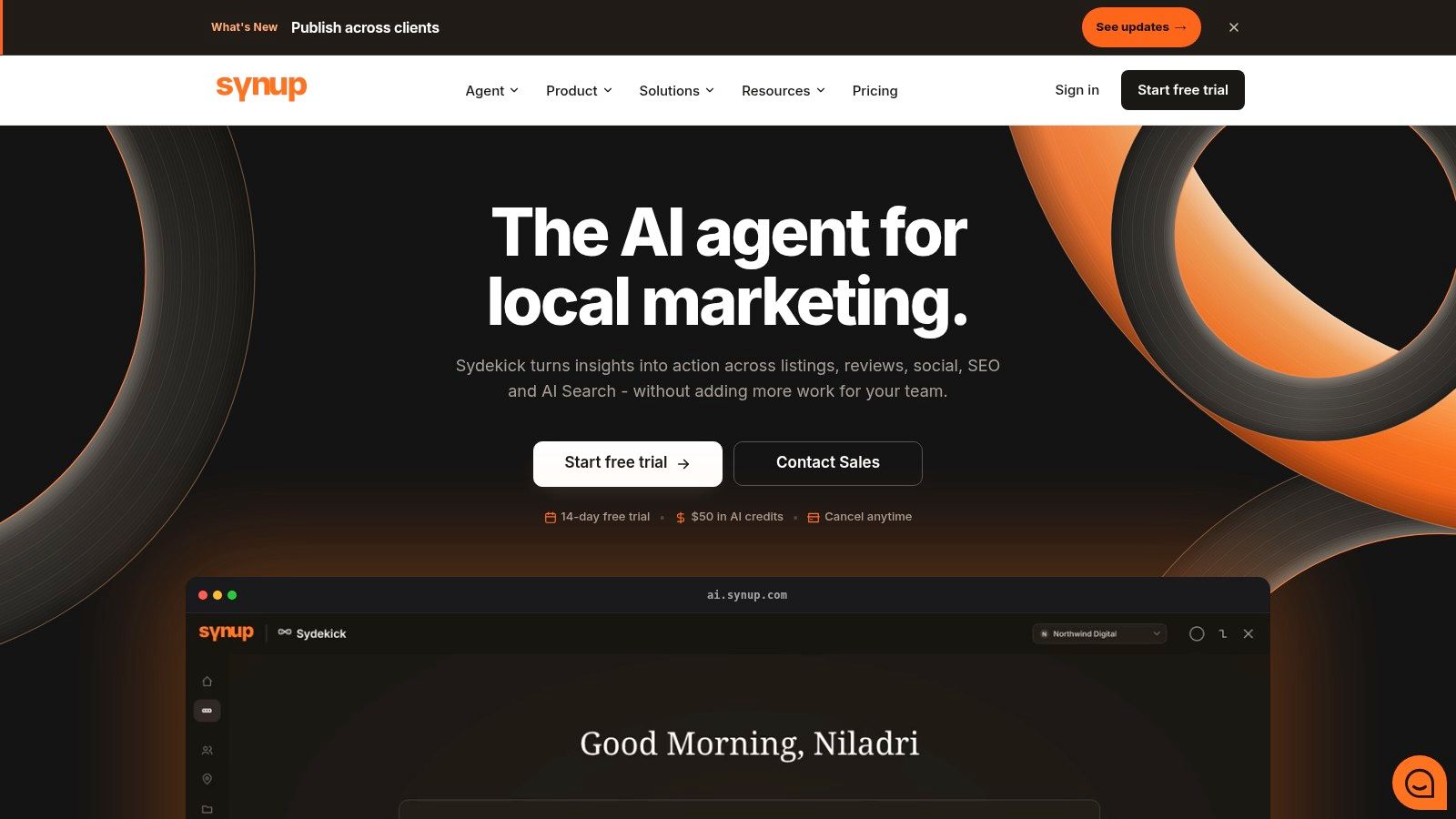
Synup fits businesses where reviews can't be separated from listings accuracy and local visibility. A wrong opening hour, a stale address, and an unanswered complaint often describe the same operational failure. Synup's review management software sits inside a broader local marketing platform covering listings sync, review monitoring and replies, review generation, local content, rank tracking, and reporting across locations.
Where the agent model helps
The differentiator is Sydekick, an AI agent with chat, memory, skills, playbooks, approval workflows, and a full audit trail. It can draft review responses, request approval, publish approved replies, and apply per-location voice rules instead of forcing one generic tone everywhere. That approval layer matters. Automated thanks are low risk, while refunds, safety complaints, and discrimination claims need a named human owner and a record of who approved the reply.
- Listings plus reviews: Profiles sync across Google Business Profile, Apple Business Connect, Bing, Facebook, and other publishers, so review work starts from accurate location data.
- Agency controls: White-label portals, scoped permissions, branded reporting, and a multi-client command center suit agencies and franchises.
- Answer visibility: Answer Engine Optimization checks presence in AI answers and points teams toward citation gaps.
The trade-off is scope. A single shop that only wants email alerts and a reply box will pay for platform breadth it may not use. Agencies, franchises, and multi-location brands juggling listings, reviews, and local pages get the clearest value, especially since plans include all features and vary mainly by location count and agent throughput.
2. Birdeye
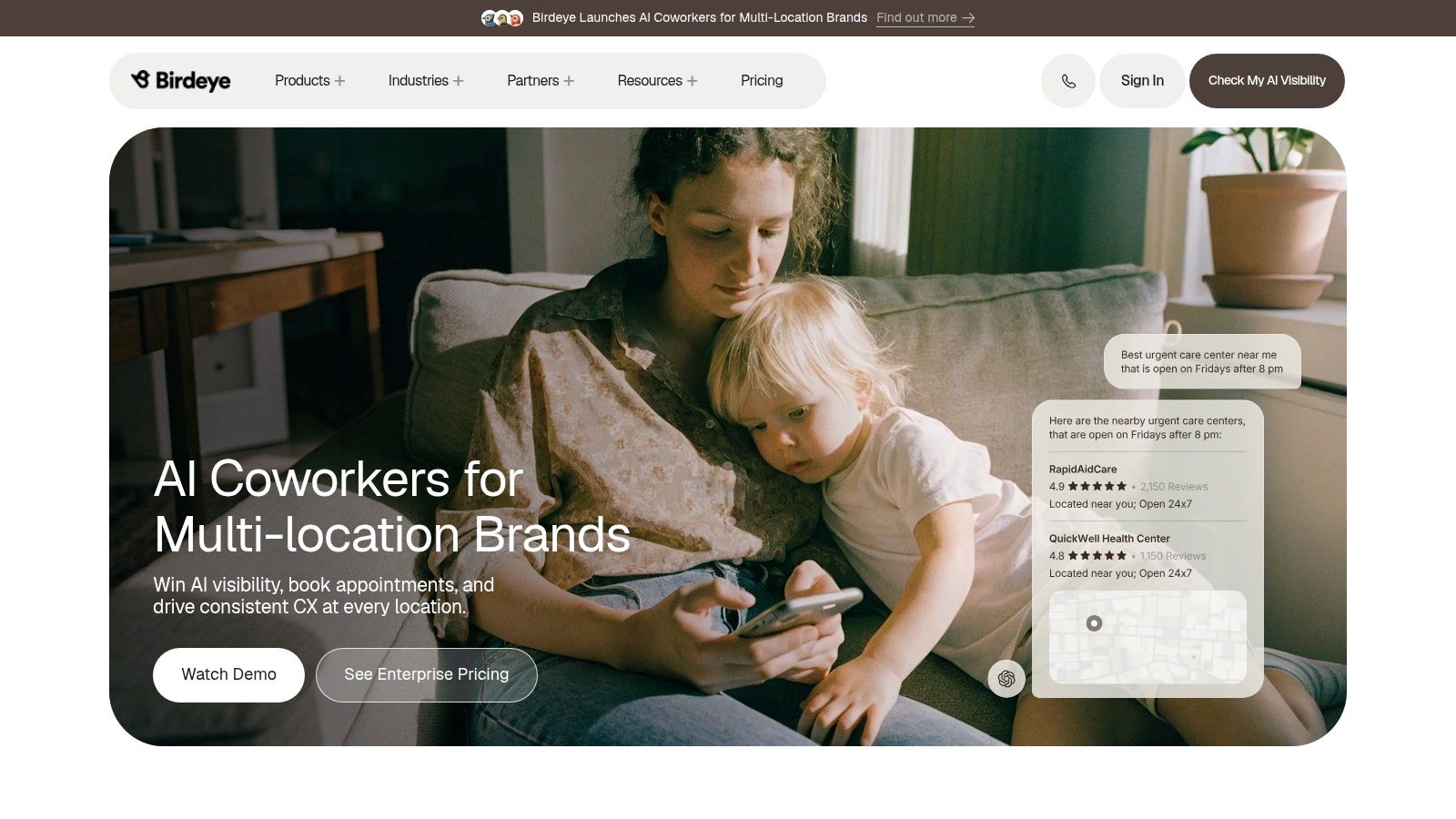
Birdeye is the broad-suite option for multi-location operators that want reviews inside a larger customer experience system. Monitoring, collection, responses, analytics, listings, messaging, and social publishing live together, which reduces vendor sprawl but raises the implementation bar. Teams exploring Birdeye should expect custom pricing and should model cost by location count and selected capabilities before signing.
Response discipline is the practical test. The Search Engine Land online review statistics guide reports that approximately 88% of consumers expect businesses to respond to their reviews. Birdeye's AI-assisted responses with brand voice and approval controls, sentiment insights, competitor comparisons, and location-level reporting support that discipline at scale.
Best fit and limits
- Strong fit: Regional and national brands that need consistent approvals and comparable reporting across many sites.
- Watch out: No public list price makes early budgeting harder.
- Overreach risk: A small business with one profile may buy messaging and suite features it never activates.
Birdeye earns consideration when review handling has multiple approvers and locations to compare. It makes less sense when the entire workflow is one owner replying from a phone.
3. Podium
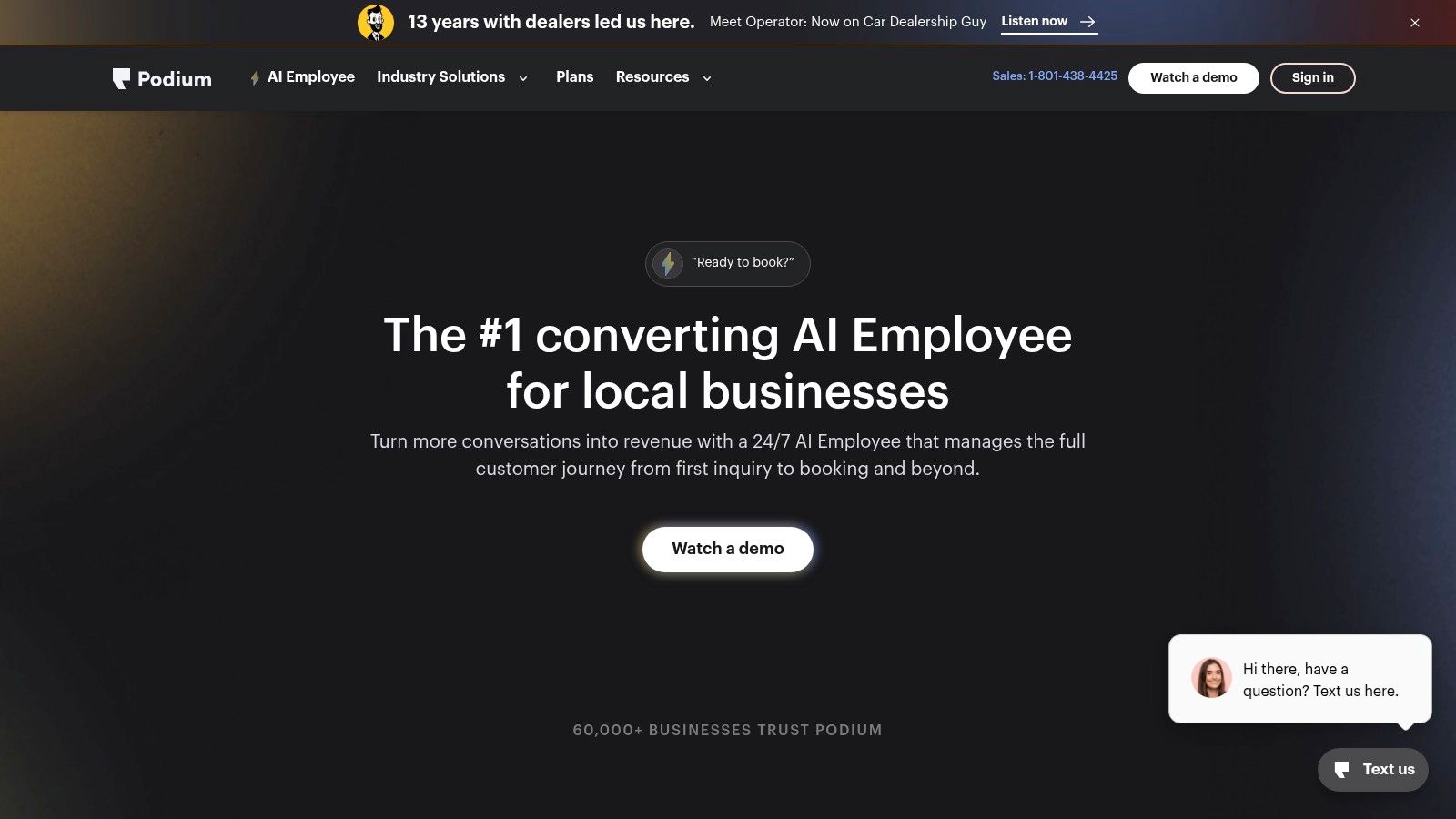
Say a home services company confirms jobs by text, sends arrival updates by text, and chases invoices by text. For that business, a review request buried in email is a mismatch. Podium builds review collection around customer messaging, with automated invitations, reminders, a shared feedback inbox, AI-assisted writing, reporting, and a mobile app.
That SMS-first design is the reason to choose it and the reason to skip it. If customers already respond to texts, review requests join an existing habit and staff can handle follow-up from the same conversation thread. If the business communicates mainly through a help desk, marketplace messages, or email, Podium's broader messaging platform adds cost without improving review volume.
Choose the channel customers already answer, not the channel the software happens to sell.
Pricing is quote-based, so direct comparison requires a written proposal. Buyers should confirm which review sources, integrations, seats, and message volumes are included in the quoted plan, since messaging add-ons can change the actual monthly total. Podium suits service businesses that want lead follow-up and reviews in one workflow. Reviews-only buyers should compare simpler tools first.
4. Reputation

Reputation combines reviews with surveys, listings, sentiment analysis, reputation scoring, and branch-level comparisons. That mix helps operators connect a public complaint about wait times with private survey feedback from the same location. Public pricing on Reputation lists Rep Core at $80 per location per month, with higher tiers at $115 and $150 per location per month.
The arithmetic is transparent, and transparency cuts both ways. A small footprint can budget quickly. A growing chain can also watch the bill scale linearly with every added branch, before add-ons and higher-tier survey or feedback tools enter the contract.
What to validate in a trial
- Scoring usefulness: Check whether the reputation score changes decisions or merely restates star averages.
- Tier gaps: Confirm which survey, listing, and response features require an upgrade.
- Location reporting: Test whether managers can see only their branch while head office retains full comparison views.
Reputation fits multi-location organizations that manage reviews and structured feedback together. Single-location businesses rarely need its scoring and survey layers.
5. BrightLocal
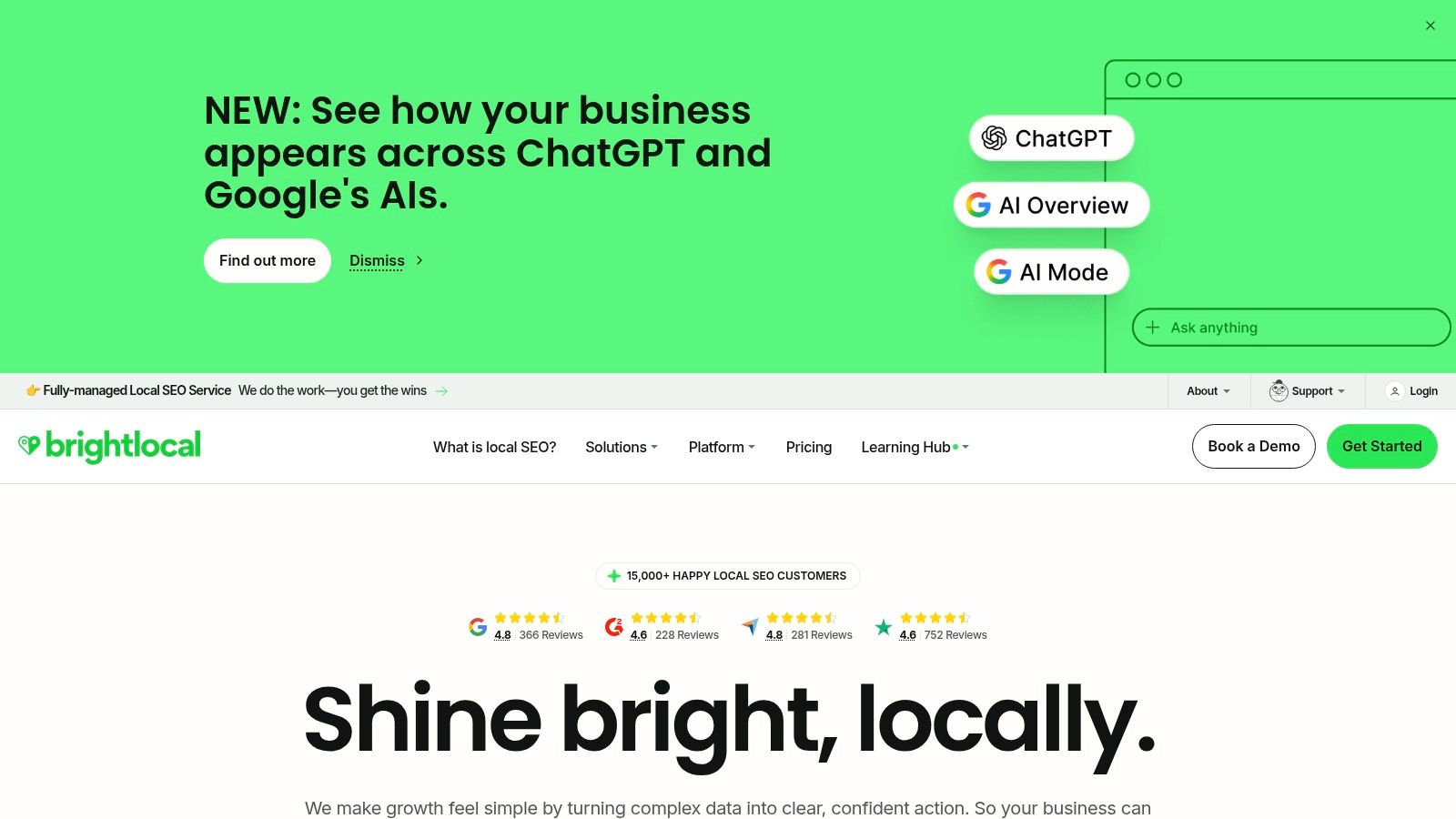
BrightLocal starts from local SEO, then adds reviews. That ordering suits agencies already reporting rankings, citations, and Google Business Profile performance for local clients. Review monitoring, responses, generation campaigns through email, SMS, and in-store prompts, and website review publishing sit in the Grow plan on BrightLocal, listed for one location at $65 monthly or $584 annually.
The plan gate is the main catch. Review management isn't included in the lower Track or Manage tiers, so buyers comparing headline entry prices can underbudget. A 14-day trial listed by BrightLocal helps, provided the trial connects real profiles and tests an actual request campaign rather than sample data.
Practical rule: Price the tier that includes review responses, not the cheapest tier on the pricing page.
BrightLocal works well when review reporting belongs in the same client report as local rankings and listings. It's more tooling than needed for an owner who only wants alerts and a reply inbox, and costs rise as locations are added.
6. GatherUp

GatherUp treats reviews as one output of a wider customer feedback loop. Requests go out by email and text, monitoring spans a broad set of review sites, and surveys capture private detail before or alongside public feedback. AI-crafted or suggested replies, an in-app response workflow, reporting, and agency options round out the platform.
That feedback-first angle suits clinics and other local service teams that need the reason behind a bad visit while still running compliant, evenly solicited public requests. The one-location Local Business plan is listed at $99 per month when billed annually on GatherUp, which also offers a 14-day trial.
Cost notes
- Single location: The published entry price can feel heavy if the job is alerts plus replies only.
- Add-ons: Review Defense and listings are separately priced options.
- Agencies: Multi-location and agency arrangements depend on location count and billing term.
GatherUp fits buyers choosing a broader local feedback platform over a reviews-only inbox. Small teams that mainly need fast response should price the extras before assuming the suite is the cheaper route.
7. NiceJob
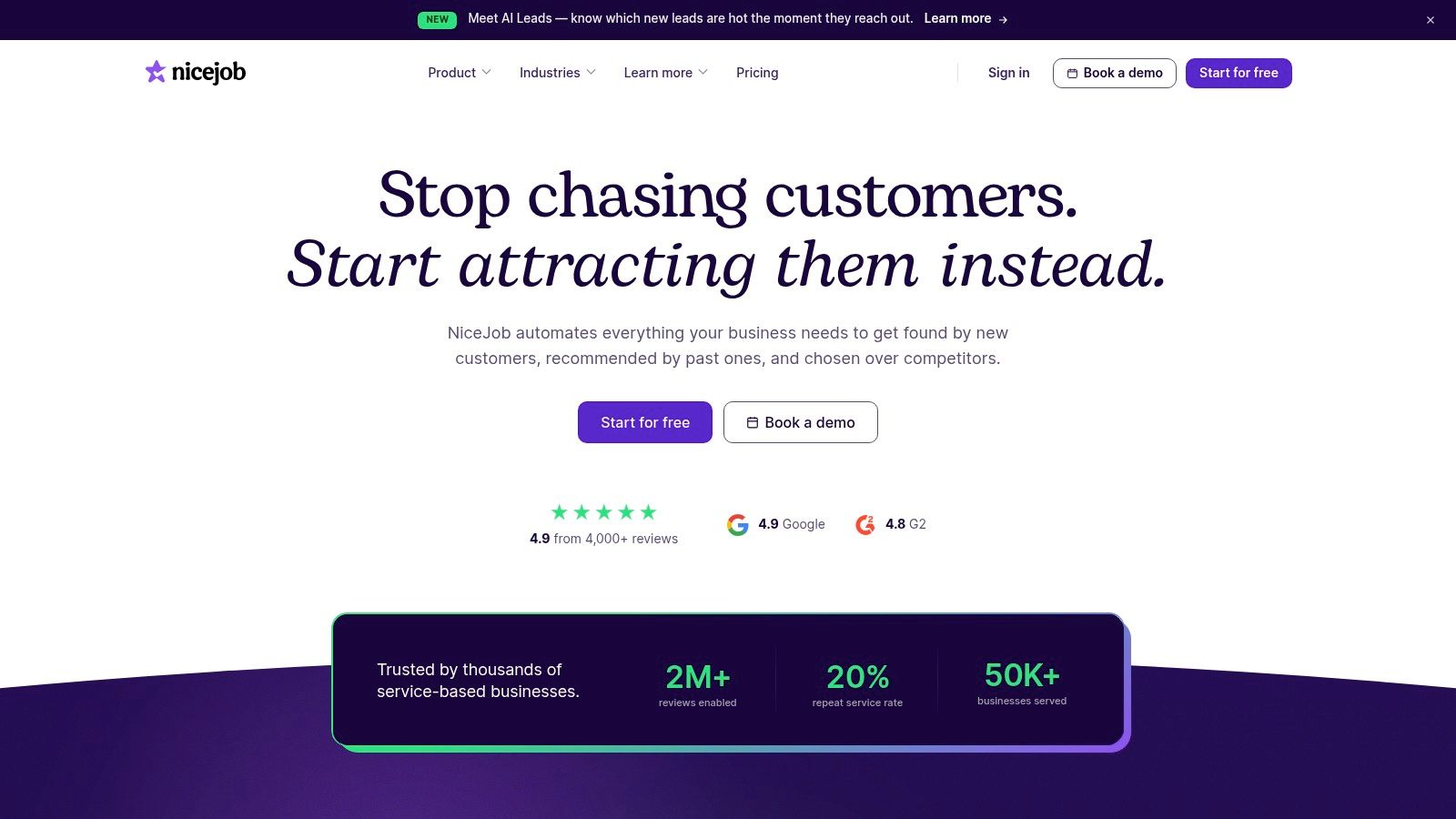
NiceJob is built for service businesses that win work through visible proof. Automated review requests and follow-ups feed website widgets, a reviews microsite, social sharing, and staff leaderboards. Public pricing on NiceJob lists Starter at $75 per month and Pro at $125 per month, with a 14-day trial and no long-term contracts.
The flat, published structure makes NiceJob easy to test against per-location rivals. A cleaning company or contractor can connect job completion to a request sequence, publish fresh proof on service pages, and share standout reviews without buying an enterprise analytics suite. Pro adds AI replies, referrals, repeat-customer campaigns, and competitor insights, so the cheaper tier shouldn't be assumed to cover response automation.
A leaderboard only helps when staff can influence the service moment being reviewed.
Integration checks matter most here. The CRM or field-service system must trigger requests at the right point, after completion and payment rather than at booking. NiceJob suits owner-led service teams that prioritize collection and display. It isn't designed for deep, multi-brand reputation analytics.
8. LocalClarity
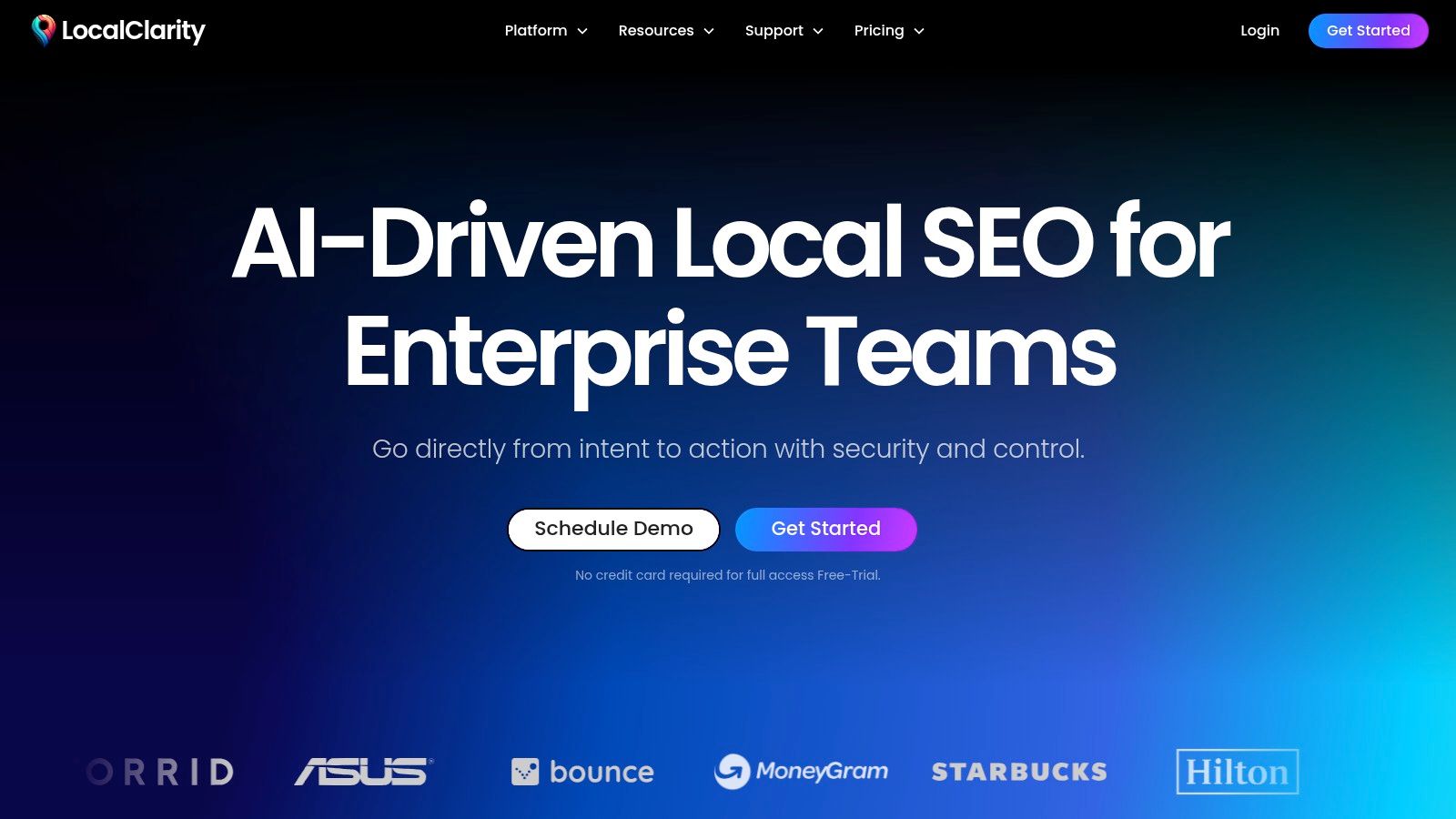
LocalClarity takes a location operations view. Reviews sit alongside profile management, reporting, sentiment analysis, and agency controls for portfolios with many locations. Monitoring covers more than 50 sources according to LocalClarity, and Professional is listed at $16 per location per month, or $12 per location per month billed yearly.
That published per-location rate is unusually easy to model. Finance can multiply locations by rate and see the exposure before a sales call. The plan description also includes unlimited users and locations, which helps agencies avoid seat rationing when client teams need access.
Where buyers should push harder
Enterprise and agency pricing is custom, and advanced functionality may sit outside Professional. Buyers should verify supported review sources, direct response capability for each source, white-label limits, and data export terms. A low per-location rate loses appeal if a key review site is monitor-only and staff still reply natively.
LocalClarity fits agencies and chains that think in portfolios and permissions. Very small businesses may find its location operations framing heavier than a simple review inbox.
9. ReviewTrackers
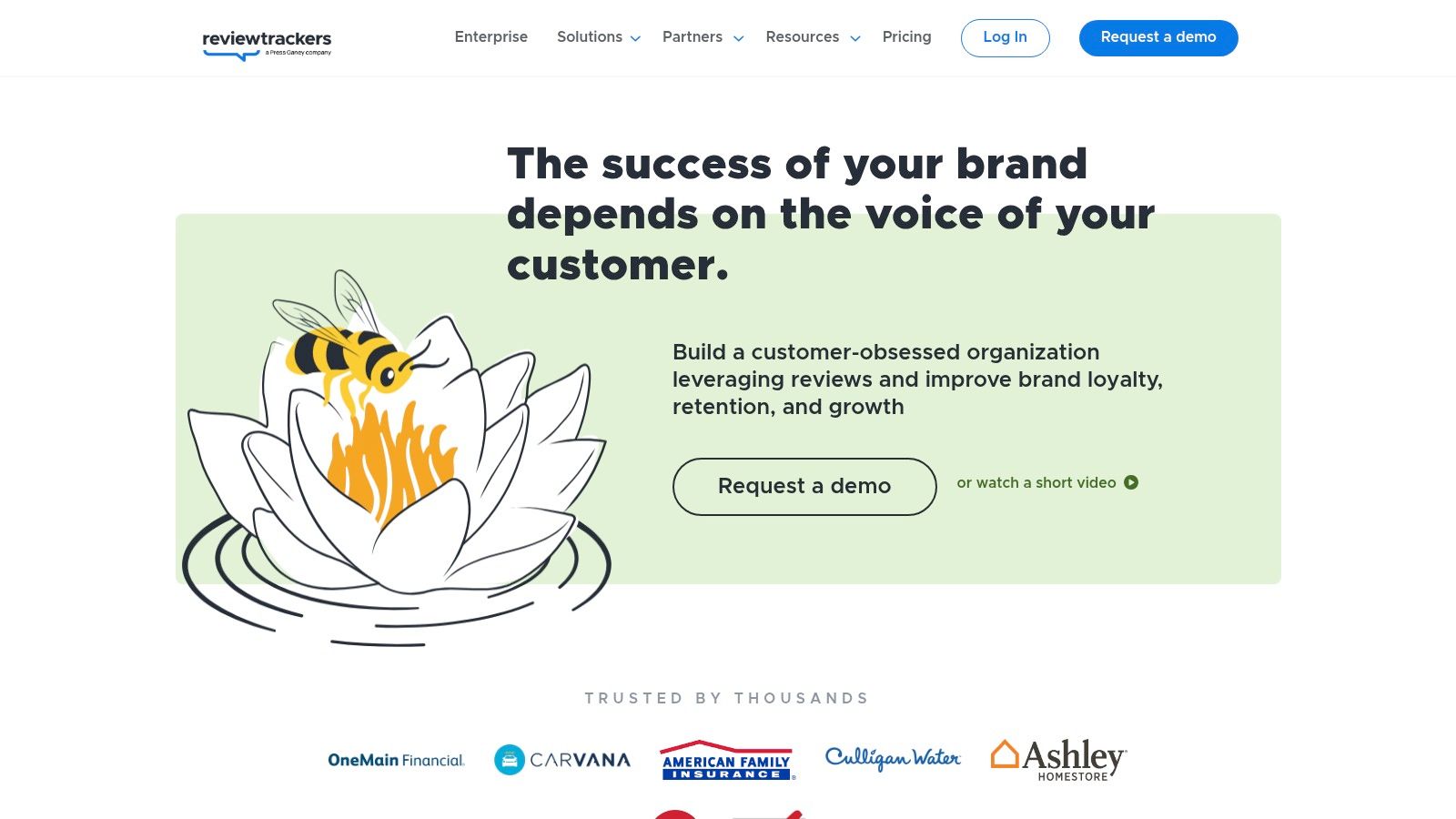
ReviewTrackers leads with analysis rather than collection. Monitoring, alerts, dashboards, solicitation, response workflows, competitor comparisons, and customer experience reporting aim to show patterns across locations and rivals. Pricing is custom through ReviewTrackers, so buyers need a proposal tied to locations, sources, and insight features.
The value case depends on decisions made from the data. If regional managers review sentiment by issue category each month and change staffing, training, or handoff processes, analytics depth pays. If nobody owns operational follow-through, dashboards become expensive reporting decoration. The Starter plan description lists unlimited users according to ReviewTrackers, which supports wider internal access without seat negotiations.
- Strong fit: Brands comparing locations and competitors to find recurring experience problems.
- Weak fit: Businesses that mainly need more review requests sent after each transaction.
- Tier risk: Competitor insights and advanced experience analysis may require higher plans.
ReviewTrackers should be judged on export quality, category accuracy, and alert speed during evaluation. Generic sentiment labels that miss sarcasm or industry terms will erode trust quickly.
10. Trustpilot Business
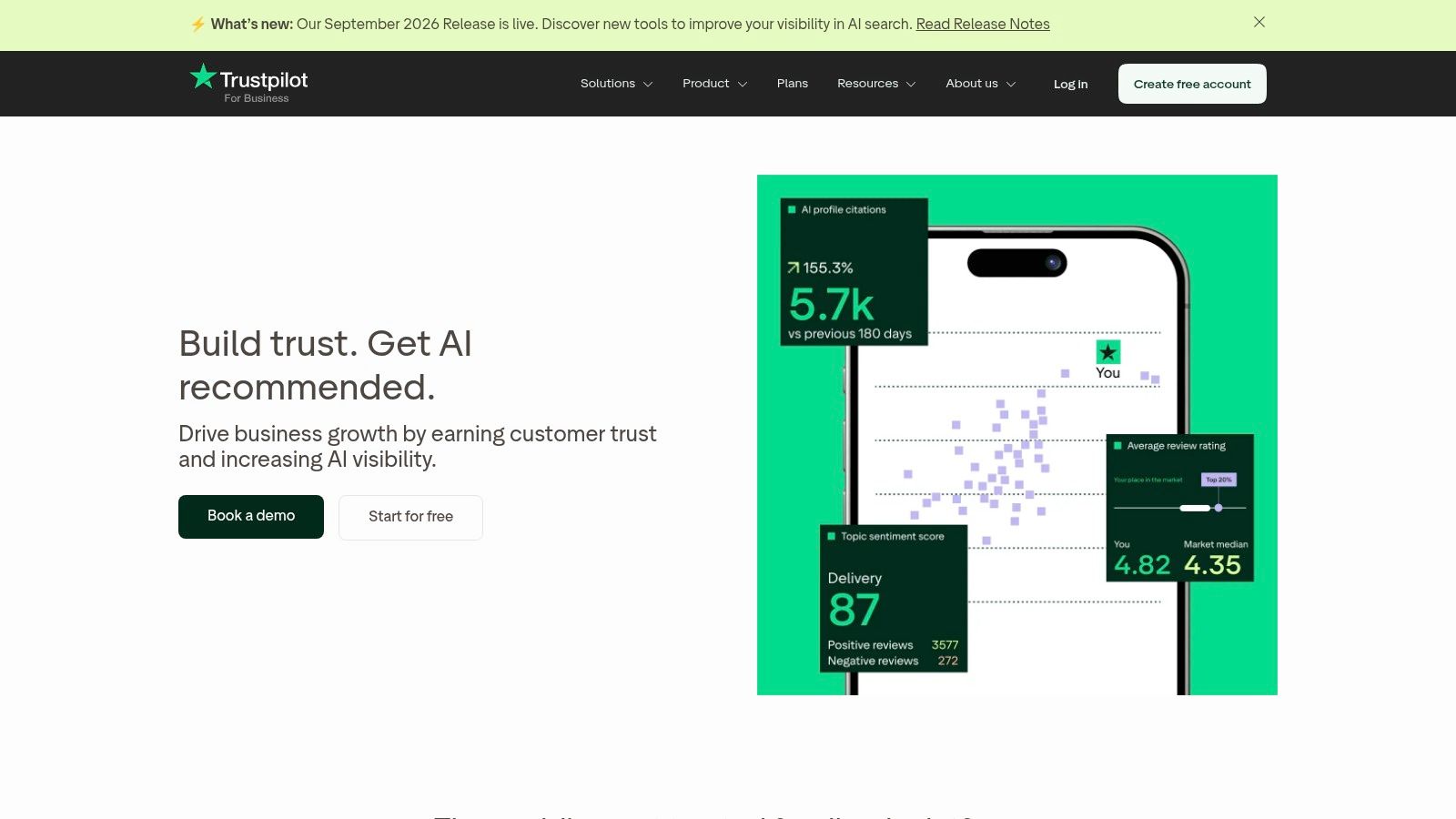
Trustpilot Business is different in kind. It doesn't provide a universal inbox for every review site. It builds a public presence on Trustpilot itself, with invitations, response tools, TrustBox widgets, marketing assets, integrations, analytics, and a TrustScore that follows the brand around the web.
Pricing on Trustpilot Business lists Starter from $99 per month per domain, Plus from $319, and Premium from $799, billed annually, with quote-based enterprise pricing. A free business profile offers basic capabilities, which lets a company claim its presence before committing.
The real trade-off
Consumers can post through the open platform, so feedback isn't limited to invited customers. That openness strengthens credibility and removes control at the same time. Paid contracts run 12 months according to Trustpilot Business, and higher invitation volumes plus richer analytics push brands into pricier tiers.
Trustpilot Business suits ecommerce and consumer brands whose buyers already check Trustpilot during research. Local businesses dependent on Google discovery still need a separate workflow for those profiles.
11. REVIEWS.io
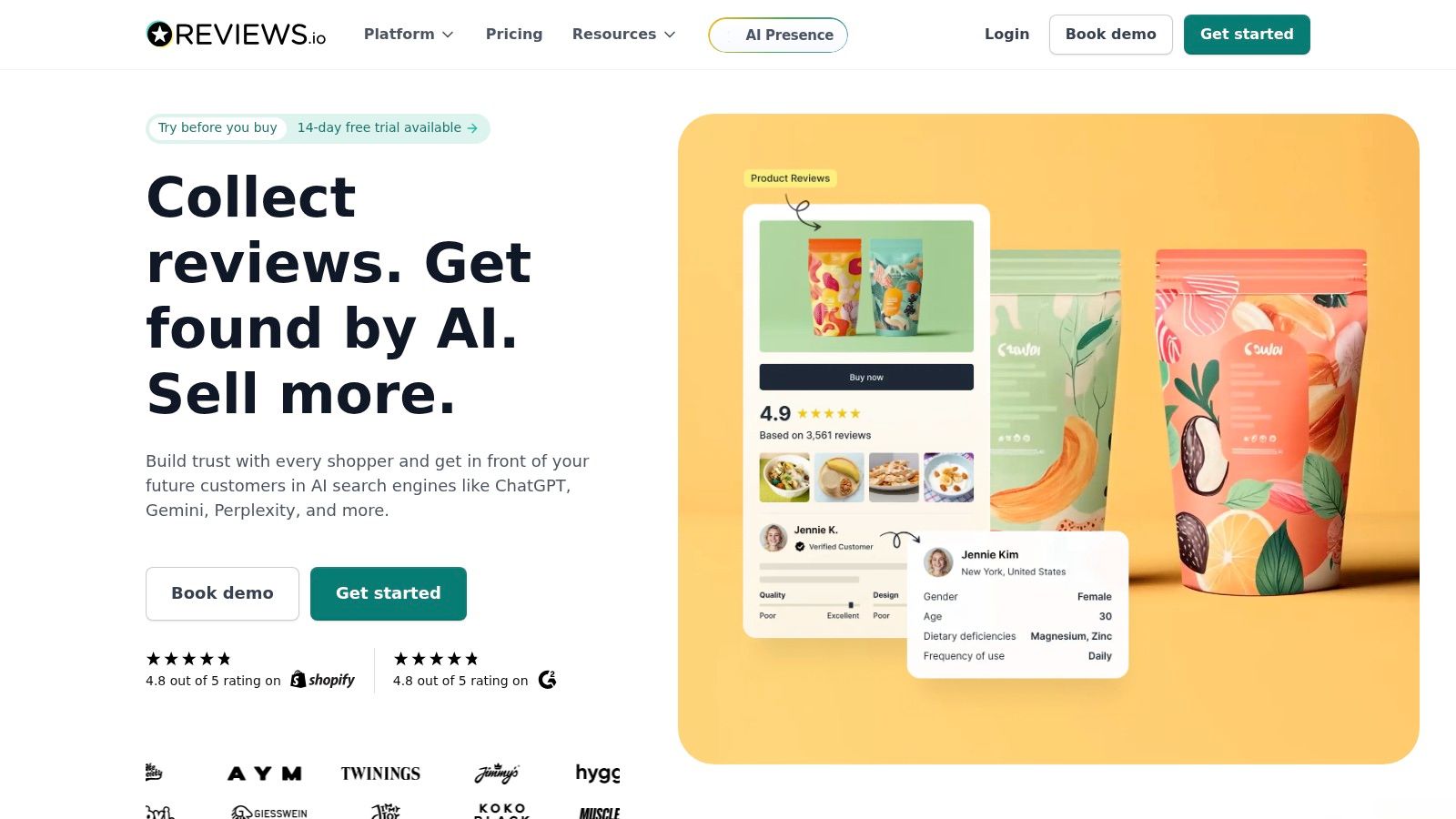
REVIEWS.io is the ecommerce specialist in this group. It collects company and product reviews, supports photo and video reviews, imports existing reviews, and displays proof through onsite widgets tied to store integrations. Essentials on REVIEWS.io is listed at $29 per month for up to 300 invitations, with a 14-day trial.
Invitation-volume pricing matches online retail better than per-location pricing. A store can forecast orders, estimate invitations, and budget accordingly. Costs rise as volume grows and as higher-tier reputation management, AI summaries, AI replies, and integrations are added, so the entry price shouldn't anchor a mature store's budget.
Store test: Check widget speed, review moderation controls, and product feed matching before judging the dashboard.
Visual user-generated content gives REVIEWS.io an edge on product pages where fit, finish, and real-world use matter. The limits appear offsite. Businesses needing broad local monitoring across Google and industry directories should verify supported sources and whether replies publish directly or require native logins.
Review management platforms at a glance
| Platform | Starting price | Pricing model | Best for | Free trial |
|---|---|---|---|---|
| Synup | Not publicly specified | Tiers by location count and agent throughput | Multi-location local marketing and reputation management | Not specified |
| Birdeye | Custom quote | Custom pricing based on locations and selected capabilities | Multi-location businesses managing reviews and local marketing | Not specified |
| Podium | Custom quote | Quote-based | Businesses combining review requests with customer texting | Not specified |
| Reputation | $80 per location/month | Tiered per-location pricing | Multi-location organizations combining reviews, surveys, and feedback analysis | Not specified |
| BrightLocal | $65/month for one location | Location-based plans; Grow includes review management | Agencies and local businesses combining reviews with local SEO | 14 days |
| GatherUp | $99/month for one location, billed annually | Plans based on locations and billing term; add-ons available | Local businesses and agencies managing reviews and customer feedback | 14 days |
| NiceJob | $75/month | Starter and Pro plans; month-to-month | Service businesses automating review requests and reputation marketing | 14 days |
| LocalClarity | $16 per location/month, or $12 billed yearly | Per-location plans; agency and enterprise pricing is custom | Businesses and agencies managing many locations and profiles | Not specified |
| ReviewTrackers | Custom quote | Custom plans with higher tiers for advanced analytics | Organizations seeking review analytics and competitive insights | Not specified |
| Trustpilot Business | $99/month per domain, billed annually | Annual plans priced per domain; enterprise pricing is custom | Consumer brands and ecommerce businesses focused on Trustpilot reviews | Free business profile; paid-plan trial not specified |
| REVIEWS.io | $29/month for up to 300 invitations | Plans scale with monthly invitation volume and features | Ecommerce businesses collecting product reviews and user-generated content | 14 days |
How to Choose and Roll Out Your Review Platform
Start with the pricing unit, because it predicts renewal pain. Per-location pricing from tools such as Reputation and LocalClarity can suit a small footprint and then scale predictably as branches open. Flat or volume pricing from NiceJob and REVIEWS.io maps better to single-location service businesses and ecommerce stores. Per-domain pricing makes sense only when that domain's public profile drives measurable conversion.
Market context supports planning for scale rather than buying the smallest tool that works today. The Research and Markets reputation management software report projects the global market will grow from approximately USD 4.42 billion in 2025 to USD 9.68 billion by 2031, a 14.60% compound annual growth rate. Growth doesn't justify overspending, but it does favor cloud systems with clean integrations, exports, and permissions that won't break when a second brand or region joins.
Compliance deserves equal weight with collection volume. The Federal Trade Commission final rule announcement of August 14, 2024 describes a rule that took effect on October 21, 2024 and prohibits fake reviews and certain deceptive practices. Buyers should require request records, source tracking, disclosure support, fraud flags, and searchable response history. A platform that helps generate reviews but can't show how they were solicited creates governance risk.
Run the trial like production
Connect real sources on day one. Send a live, compliant batch of requests to recent customers and measure delivery, completion, and time spent per reply. Route one negative review through escalation, one routine positive review through approval, and one suspected fake through reporting. Export the data before the trial ends.
AI needs the same discipline. A 2025 analysis in the Journal of Retailing and Consumer Services covering 714,016 reviews found AI-generated fake reviews were generally more comprehensible but less specific and empathetic than authentic reviews. Detection flags therefore need human review, explainable reasons, and a quarantine path that avoids accusing genuine customers on weak evidence.
Trust also depends on visible provenance. The European Commission key consumer data page summarizes the 2025 Consumer Conditions Scoreboard, which found 66% of EU consumers had encountered reviews they believed were not genuine. Review pages should explain collection methods and verification clearly, in plain language customers can find.
Roll out in two weeks with named owners. Assign who monitors, who approves sensitive replies, who contacts unhappy customers offline, and who reviews unresolved aging every week. Track response coverage, time to first response, resolution time, sentiment by issue, and request conversion by channel. Average rating alone hides slow service recovery.
Reviews also create reusable proof for social channels, and that publishing work shouldn't live in scattered tabs. PostWing at postwing.io lets teams write once and schedule across eight networks, with per-platform caption control and a visual calendar, complementing a review platform rather than replacing it. Document trial results, total cost at expected scale, and exit terms before signing annually.
Ready to turn strong reviews into consistent social proof without rebuilding every post eight times? Start a free trial with PostWing at postwing.io, connect accounts through each platform's official login, schedule the first review-led post across every network from one dashboard, and check publish status for every account at a glance.